Understanding PM-KUSUM: Progress Across India's Farm Solar Programme
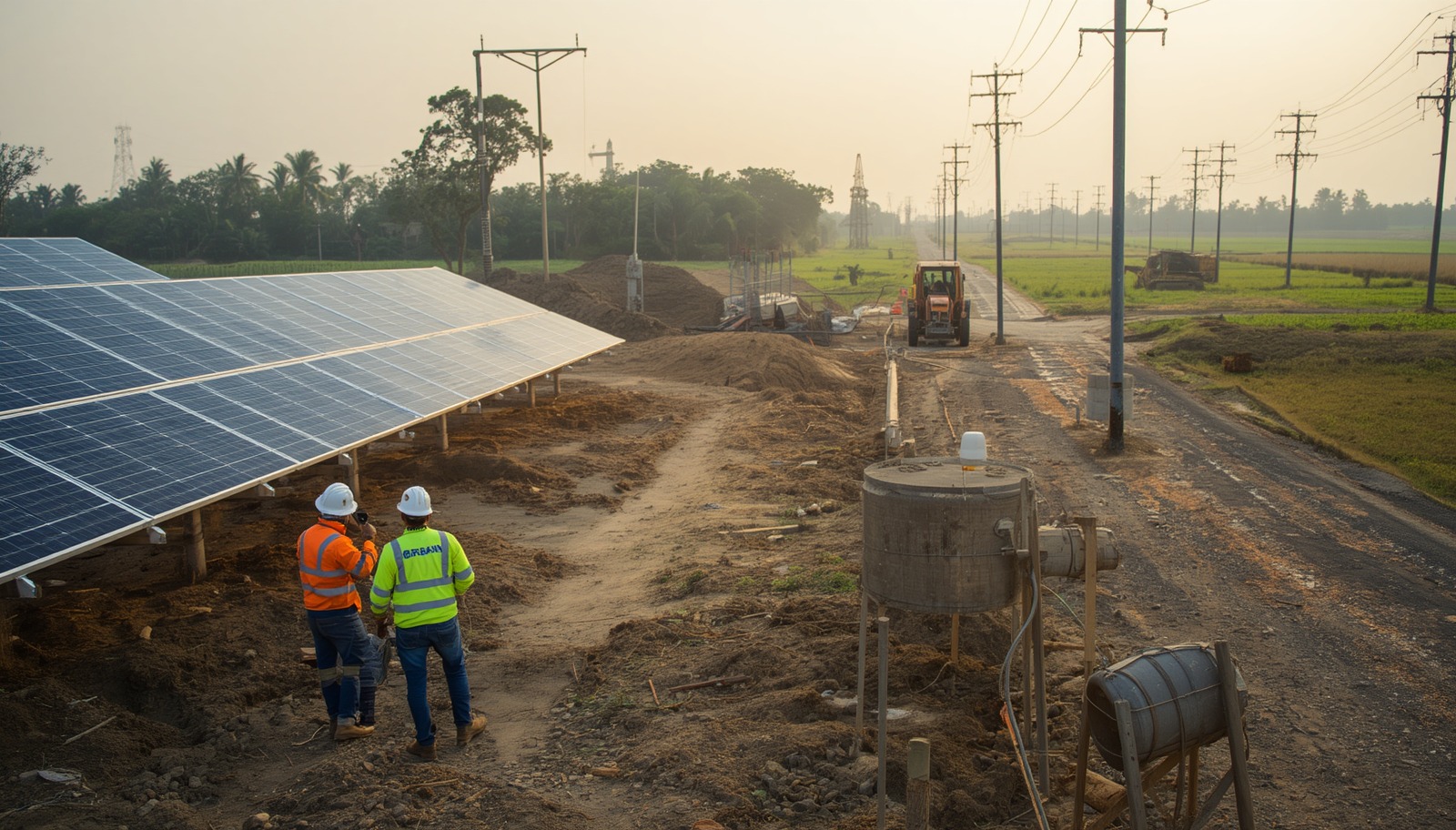
India's renewable energy transition is increasingly extending beyond large utility-scale solar parks into decentralised infrastructure located closer to where electricity is consumed. Agriculture has emerged as one of the most significant frontiers of this transition, with PM-KUSUM supporting the deployment of solar pumps, feeder solarisation and decentralised solar plants across multiple states.
Since its launch in 2019, the programme has grown into one of India's largest distributed renewable energy initiatives, supporting new approaches to agricultural power supply while contributing to the country's broader clean energy ambitions.
How PM-KUSUM Is Structured
The programme runs across three components:
- Component A: Decentralised grid-connected solar plants (0.5–2 MW) established on agricultural or barren land.
- Component B: Standalone solar-powered irrigation pumps replacing conventional grid-connected or diesel-powered pumps.
- Component C: Solarisation of agricultural feeders (FLS) and existing irrigation pumps (IPS).
These components serve a different purpose within the programme and therefore follows its own implementation pathways. Reviewing them individually provides a clearer picture of how PM-KUSUM has progressed across the country.
Understanding PM-KUSUM and State-Level Schemes
PM-KUSUM operates as the national umbrella framework, but several state-level solar agriculture schemes run alongside or integrate with it under their own branding, targets, and subsidy structures. This layering often creates confusion among developers, and stakeholders.
|
Scheme |
State |
Focus |
Target |
|
MSKVY 2.0 (Mukhyamantri Saur Krushi Vahini Yojana) |
Maharashtra |
Feeder solarisation |
≈16 GW |
|
SKY (Suryashakti Kisan Yojana) |
Gujarat |
Farmers generate and sell surplus solar power |
State-specific |
|
MMSKY (Mukhyamantri Saur Krushi Yojana) |
Karnataka |
RESCO-based feeder solarisation |
≈3 GW |
|
Surya Mitra Krishi Feeder Scheme |
Madhya Pradesh |
Feeder solarisation across substations |
≈14.5 GW across 1,900+ substations |
Each of these operates within its own policy structure while contributing to PM-KUSUM's national targets. For developers and lenders working across multiple states, distinguishing the umbrella programme from its state-level counterparts is a practical necessity. Subsidy structures, bidding eligibility, and approval pathways differ by scheme even where the underlying technology and objective are identical.
Programme Progress
Based on MNRE data as of 28 February 2026, implementation progress across the three components is summarised below:
|
Component |
What it covers |
Sanctioned |
Installed / Solarised |
% Progress |
|
A |
Decentralised solar plants |
10,000 MW |
1437.7 MW |
14.4% |
|
B |
Standalone solar pumps |
13,07,190 units |
11,24,074 units |
86.0% |
|
C (FLS) |
Feeder-level solarisation |
35,36,602 units |
15,89,442 units |
44.9% |
|
C (IPS) |
Individual pump solarisation |
55,392 units |
15,405 units |
27.8% |
The pace of progress varies across the components. Component B has recorded the highest level of deployment, followed by Component C, and Component A.
State-Level Execution
Completion rates vary across states within each component. On Component A, only three states (Himachal Pradesh, Tamil Nadu, and Uttar Pradesh) have reached 100% of sanctioned capacity. On Component B, Kerala, Punjab, and Tamil Nadu have installed 99–100% of sanctioned pump targets, while Maharashtra leads on volume with over 5 lakh pumps installed. On Component C, Maharashtra has achieved 100% of its sanctioned feeder solarisation target, and Rajasthan has reached 100% on individual pump solarisation.
Completion percentages do not always reflect installed capacity. Himachal Pradesh, with 100 MW sanctioned under Component A, and Tamil Nadu, with 3 MW sanctioned under this specific component, both reached 100% completion. Rajasthan, despite recording the highest installed capacity under Component A at 1,040.99 MW, has completed approximately 18.5% of its sanctioned allocation. This reflects the size of each state's sanctioned allocation under Component A rather than its overall solar capacity or standing.
Understanding the Progress Pattern
The disparity between components reflects execution complexity. A standalone solar pump is a single-site installation with minimal external dependencies, while a 0.5–2 MW decentralised solar plant requires land aggregation, grid connectivity approvals and coordination with the local DISCOM before commissioning. Feeder solarisation also involves utility-level planning and network integration. Together, these different implementation requirements influence the pace of progress observed across the three components.
The Union Budget 2026-27 allocated approximately ₹5,000 crore to PM-KUSUM, up from approximately ₹2,600 crore budgeted for FY2025-26, according to PRS India's Demand for Grants analysis. The same analysis notes that actual expenditure under the scheme in 2025-26 ran 92% higher than what had originally been budgeted for that year, reflecting stronger-than-planned absorption of funds. Union Minister for New and Renewable Energy Pralhad Joshi has outlined a proposed 10 GW agrivoltaics component under PM-KUSUM 2.0, signalling continued policy focus on expanding distributed solar applications in agriculture.
What's Next: KUSUM 2.0 Signals
Several developments indicate the programme's direction over the next phase.
Private sector participation in FLS. Independent power producers and developers, in addition to farmers and DISCOMs, can now participate in feeder-level solarisation projects. This broadens the delivery model for Component C and is expected to support wider implementation through increased private sector participation.
Storage integration. Battery energy storage system (BESS) co-location is emerging as a priority for grid stability and round-the-clock power supply. Maharashtra's MSKVY 2.0 BESS rollout reflects the growing focus on integrating energy storage with decentralised solar infrastructure.
Agrivoltaics. National trials are underway for agrivoltaic systems that combine solar generation with active agricultural use, offering an alternative approach to land utilisation for future projects.
Higher pump eligibility. A proposed expansion beyond the current 7.5 HP cap to include 15 HP+ pumps would extend programme eligibility to a broader range of agricultural applications, particularly larger farms with higher irrigation requirements.
Peer-to-peer trading readiness. Delhi's February 2026 pilot is testing peer-to-peer electricity trading through a digital platform for rooftop solar prosumers. As distributed renewable energy markets evolve, similar digital transaction frameworks could create future opportunities for farmers to monetise surplus solar generation.
*Note: Data source: PIB and MNRE (as of 02 July 2026).

Please rotate youauto-rotater device to portrait mode to login.